By focusing on entity-based SEO, we show how ecommerce stores can structure categories, products, and content to build topical authority, improve Google’s understanding, and drive relevant, high-quality traffic.
Table of Contents
1. Introduction
1.1 What is Entity-Based SEO?
For years, SEO was all about keywords. You picked a few phrases, added them to your titles and paragraphs, and hoped Google would put you on the first page. That used to work pretty well.
Today, search engines have become much smarter. They no longer look just at the words on your page but at what those words actually mean. That’s where Entity-Based SEO comes in.
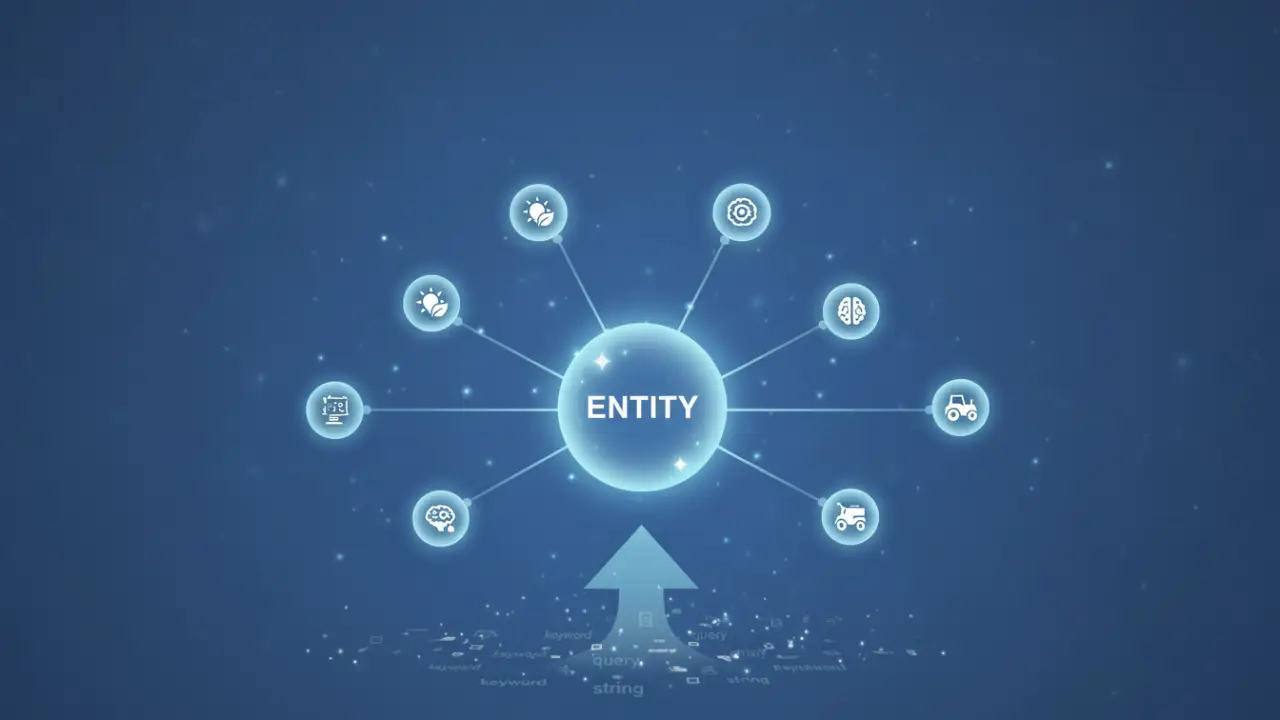
An entity is simply something that exists and can be clearly defined. It can be a person, a place, a product, or even an idea. For example:
- “Elon Musk” is a person (entity).
- “Tesla” is a company (entity).
- “Electric cars” is a topic (entity).
Google’s job is to understand how all these entities connect to each other. It knows that Elon Musk is the CEO of Tesla and that Tesla makes electric cars. When your website helps Google understand these kinds of relationships, it starts to see you as an authority on that topic.
1.2 Why Keyword SEO Isn’t Enough Anymore
Not long ago, SEO was about repeating your target keyword as many times as possible. If you wanted to rank for “best digital camera,” you made sure that exact phrase appeared all over your page.
That approach doesn’t work anymore. Google now focuses on understanding the intent behind a search. It wants to deliver results that best answer the question someone is asking, not just match the words they typed.
For example, if someone searches for best digital camera for beginners, Google will look for pages that talk about:
- Camera models suited for first-time users
- How to choose your first camera
- Easy-to-use settings and features
If your article only repeats “best digital camera” over and over without offering real value or context, Google won’t see it as helpful.
1.3 Why Entity-Based SEO Matters
Entity-Based SEO helps your website build topic authority. When all your content connects around a clear subject area, Google understands that you’re an expert in that field.
Imagine you own a website about digital photography. You publish guides on:
- Digital cameras
- Lenses
- Lighting
- Editing software
All of these topics are connected. Over time, Google recognizes your site as a trusted source for photography information.
But if you suddenly start posting about snorkeling gear or car parts, you break that connection. It confuses Google about what your site is actually about, and you lose the authority you’ve built.
Entity-Based SEO keeps your content focused and helps search engines (and people) see you as an expert on the topics that truly matter to your business.

2. Understanding Entities
2.1 What Is an “Entity” in SEO Terms?
In SEO, an entity is something that has a clear and specific meaning that both people and search engines can easily understand.
For an e-commerce business, an entity can be:
- A product, such as the iPhone 16
- A brand, such as Nike or Samsung
- A category, such as wireless headphones
- A place, such as Amazon.com or Walmart
When Google understands your entities, it knows exactly what your store offers and what type of customers might be interested.
For example, if your online shop sells digital cameras, Google connects your website to related entities such as Canon, Nikon, mirrorless camera, and photography gear. This helps your store appear in relevant searches about those topics, even when people use different words to search for them.
2.2 Entities vs. Keywords: What’s the Difference?
A keyword is just a word or phrase that people type into Google. An entity is the actual thing that word refers to.
Think of it this way:
- The keyword “buy running shoes” is what a person types.
- The entities behind that search are running shoes (product), Nike or Adidas (brands), and online shoe stores (business type).
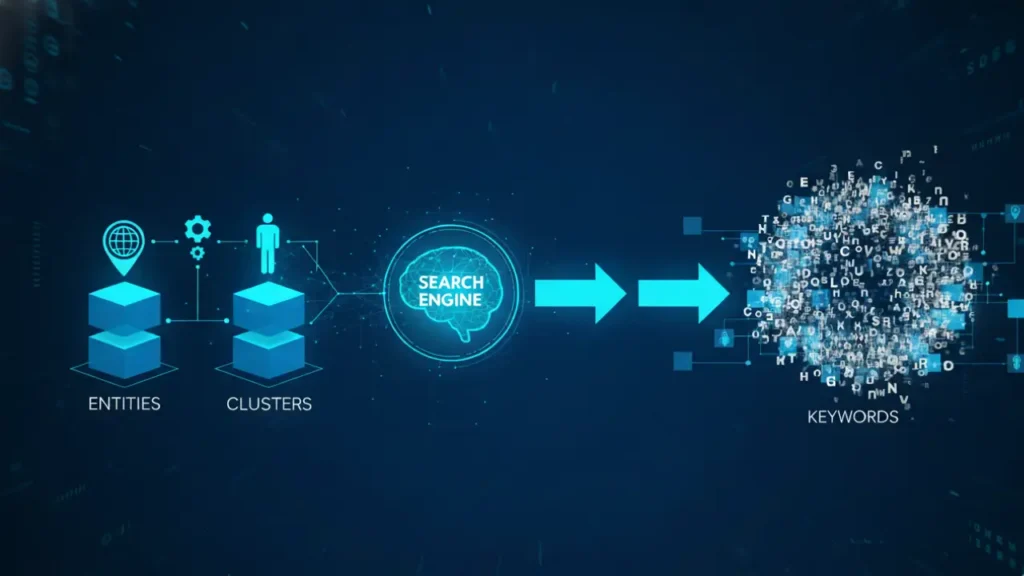
When you optimize only for keywords, you might attract some visitors. But when you optimize for entities, you build long-term trust and relevance. Google learns that your website is part of a network of connected topics, not just a list of words.
For example, a store that sells running shoes, running apparel, and running accessories is clearly focused on the topic of running. But if that same store suddenly starts selling kitchen blenders, Google will have a harder time understanding what the website is really about.
2.3 How Search Engines Recognize and Connect Entities
Search engines like Google use advanced systems to identify and connect entities. They look at the words on your page, your internal links, structured data (schema), and even mentions on other websites.
If your online store frequently mentions entities like Canon, digital camera, and photography accessories, and these terms are linked together in a clear way, Google understands that your website is about digital photography equipment.
It also connects your store to external sources. For example, if your brand is mentioned on a trusted site like TechRadar or Digital Photography Review, that helps Google confirm what your store is known for.
In simple terms, Google builds a “map” of how your website’s entities relate to each other and to the larger world. The clearer that map is, the better your chances of ranking for all relevant searches.
2.4 Examples of Entities (People, Places, Brands, Topics, and More)
Let’s look at some common entities you might deal with in ecommerce:
People:
- Jeff Bezos, connected to Amazon and ecommerce
- Elon Musk, connected to Tesla and electric vehicles
Places:
- Split, Croatia, connected to local delivery or store pickup
- New York, connected to fashion stores or electronics shops
Brands:
- Apple, Nike, Samsung, Canon
Products:
- iPhone 16, AirPods Pro 2, Canon EOS R6
Topics or Categories:
- Wireless headphones, men’s running shoes, home fitness equipment
Each of these entities is part of a larger network. When your content helps Google understand how they relate to each other, your store becomes more trustworthy and relevant for users searching within that topic.
3. How Entity-Based SEO Works
3.1 How Google Uses Entities (Knowledge Graph, MUM, and BERT)
Google uses entities to understand the real meaning behind content. It does this through systems like the Knowledge Graph, BERT, and MUM.
The Knowledge Graph is Google’s massive database of people, places, products, brands, and concepts. When you search for something like “Sony WH-1000XM5”, Google already knows it is a wireless headphone model made by Sony, it knows the price range, related accessories, and reviews.
BERT helps Google understand the context of language. For example, if someone searches for “best camera for travel photography”, BERT helps Google understand that the intent is to find a lightweight and portable camera, not just any “camera.”
MUM (Multitask Unified Model) takes this even further. It allows Google to understand complex relationships across languages and content types like images, videos, and articles. If you write a guide comparing mirrorless vs DSLR cameras and include product images, MUM can connect that to related entities and display your content to users searching for similar comparisons.
For ecommerce, this means Google is not only looking for keywords. It wants to see if your store fits into a larger, meaningful web of entities and topics that make sense together.
3.2 The Role of Context, Relationships, and Semantic Relevance
Entities do not exist in isolation. Google looks at how they connect to each other. This is called semantic relevance.
For example, imagine your store sells home fitness equipment. Your main entities could be treadmills, dumbbells, resistance bands, and yoga mats. These all belong to the same topic cluster of home workouts.
If your content links these products together naturally, Google understands the relationship. A blog post about “How to set up a home gym” that mentions all these products gives strong signals that your website is an authority on home fitness.
On the other hand, if your store suddenly adds unrelated products like gaming chairs or kitchen blenders, that breaks the semantic connection. Google becomes unsure about your main focus, and your authority within the fitness topic may drop.
The key is to make sure your content, links, and products stay connected to the same group of related entities. That’s what helps Google trust your site.
3.3 How Entities Help Build Topic Authority
Topic authority means that Google sees your website as a reliable and knowledgeable source within a specific area. Entities are the building blocks that create that authority.
Let’s take an example.
If your online store sells skincare products and you publish content around these related entities:
- Moisturizers
- Sunscreen
- Vitamin C serum
- Skin hydration tips
All these entities belong to the same topic of skincare. The more you connect them through your content and internal links, the more Google understands that your website is an expert on this subject.
Over time, you can even appear in Knowledge Panels or featured snippets if Google sees your brand as a known entity connected to that field.
3.4 Entity Signals Google Looks For
Google uses many signals to determine if a website is properly connected to a specific set of entities. Here are the main ones:
- Clear content structure
Each page should focus on one main entity and link naturally to related ones. - Internal linking
Pages about similar topics should link to each other. A page about digital cameras should link to camera lenses or tripods, not to unrelated products. - Structured data (Schema)
Adding schema markup helps Google identify entities more easily. For example, Product schema tells Google what the product name, brand, price, and reviews are. - External mentions and backlinks
When other websites mention your brand, products, or articles, it helps Google confirm that your entities are real and trusted. - Consistent brand information
Your brand name, address, and other details should be the same across your website, Google Business Profile, and social media. Consistency helps Google connect your business entity to the correct information.
When all these signals work together, your website becomes part of Google’s larger “map” of entities. That’s when you start ranking higher, not just for specific keywords, but for entire topics and product areas.

4. Building an Entity-First SEO Strategy
4.1 Identifying the Core Entities Around Your Business
The first step in entity-based SEO is figuring out the main entities your store is associated with. These are the products, brands, categories, or concepts that define your business.
For example, imagine you run an ecommerce store that sells home kitchen equipment. Your core entities could include:
- Products: stand mixers, air fryers, blenders
- Brands: KitchenAid, Philips, Breville
- Categories: baking tools, cooking appliances, coffee makers
By clearly identifying these core entities, you can make sure all your content, product pages, and marketing materials are connected to what your store actually sells. This forms the foundation for building authority in your niche.
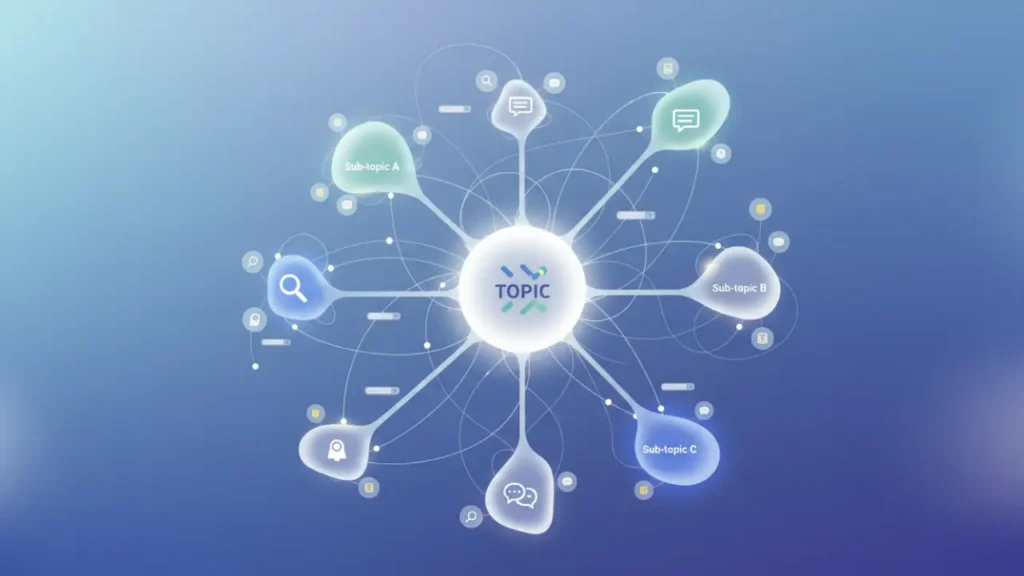
4.2 Mapping Entity Relationships (How Your Topics Connect)
Once you know your core entities, the next step is to map how they are connected. Google understands your site better when related entities are linked logically.
Using the kitchen equipment store example:
- Stand mixers relate to baking tools and KitchenAid
- Blenders relate to smoothie recipes and Philips
- Coffee makers relate to coffee beans, grinders, and Breville
By creating this map, you ensure that every page on your website is part of a network that clearly communicates your store’s area of expertise. Google sees these connections as a sign of topical authority.
4.4 Structuring Content Around Topics, Not Keywords
Keyword-focused SEO often leads to content that repeats the same phrase over and over. Entity-based SEO focuses on creating content that fully covers a topic and all related entities.
For the kitchen equipment store:
- Instead of just targeting the keyword “best stand mixer”, write content about stand mixers, baking accessories, recipes you can make with a mixer, and top brands.
- Include naturally related entities like KitchenAid, Breville, dough hooks, and mixing bowls.
This way, your page signals to Google that it is a complete resource about the topic, increasing the chances of ranking for multiple related searches.
By structuring your content around topics and their connected entities, you create a strong ecosystem of pages that reinforce each other and build your authority in your niche.
5. Practical Optimization Techniques
5.1 How to Create Entity-Rich Content
Creating entity-rich content means writing in a way that clearly connects your main topic to all related products, brands, and categories.
Imagine you run an online store that sells outdoor gear, including tents, backpacks, hiking shoes, and sleeping bags. The main entities are the product categories like tents, backpacks, and hiking shoes. Related entities could be waterproof tents, lightweight backpacks, trail running shoes, or camping stoves.
When you create content like blog posts or buying guides, naturally include these related keywords. For example, a post titled “How to Choose Gear for a Weekend Hiking Trip” can mention tents, backpacks, sleeping bags, hiking boots, and headlamps. This helps Google understand that your store covers the broader topic of outdoor gear, not just individual products.
A WDF*IDF checker can help here. It analyzes top-ranking pages for a given keyword and shows which related terms or entities they include. For example, if competitors mention hydration packs and waterproof jackets in a guide about weekend hiking gear, and you do not, that indicates entities you might be missing. On the other hand, if you keep repeating “best hiking gear” too many times, the tool will show that you are overusing a term.
5.2 On-Page Optimization (Headings, Internal Links, Schema)
Once you know your main entities, structure your pages to make them clear to Google.
Headings:
Use headings that reflect both your main entity and related entities. For example, on a page about camping gear, H2s could include best tents for family camping, lightweight backpacks for beginners, and top hiking shoes for rough trails.
Internal Links:
Link your related pages together. A page about family tents could link to camping sleeping bags, camping cookware, and hiking backpacks. This creates a clear web of related entities across your store.
Schema:
Use schema markup to identify products and categories. Product schema should include brand, price, rating, and availability. Article schema can be used for guides or blog posts. Schema helps Google show rich results like reviews, product availability, and pricing.
5.3 Using Structured Data (Schema.org, JSON-LD, and Wikidata Links)
Structured data gives Google extra context about your pages. JSON-LD is the most recommended format.
For an ecommerce store, important schemas include:
- Product schema for every item in your store
- Breadcrumb schema to show product category structure
- Organization schema for your store’s details
- FAQ schema for answering common customer questions
If your products are part of a recognized entity, link to Wikidata or Wikipedia. For instance, if you sell The North Face backpacks, adding a “sameAs” link to the brand’s Wikipedia page confirms the entity and strengthens Google’s understanding of your store.
5.4 Building Context Through External Links and Mentions
Google does not look at your site alone. Mentions from trusted external sites confirm your entities and increase authority.
For a store selling outdoor gear, this can include:
- Links from hiking blogs reviewing your products
- Mentions in online camping guides or outdoor magazines
- Listings on outdoor gear directories or marketplaces
You should also link out when appropriate. For example, if you mention a type of tent that meets UL standard for waterproofing, linking to the official standard’s page helps Google understand the context of your products.
5.5 Leveraging Knowledge Panels and Brand SERPs
As your entity signals grow, Google may show a Knowledge Panel for your store. This box displays your brand, logo, and important information in search results.
To increase your chances:
- Keep your store information consistent across your website, social media, and Google Business Profile
- Use Organization schema to identify your brand
- Gain mentions from trusted sources, blogs, or industry publications
- Create a Wikidata or Wikipedia page if your brand qualifies
Your Brand SERP is what people see when searching your store’s name. A strong Brand SERP includes your homepage, category pages, social profiles, product listings, and reviews. Optimizing this helps Google fully understand your store as a trusted entity and authority in your niche.

6. Good vs. Bad Examples
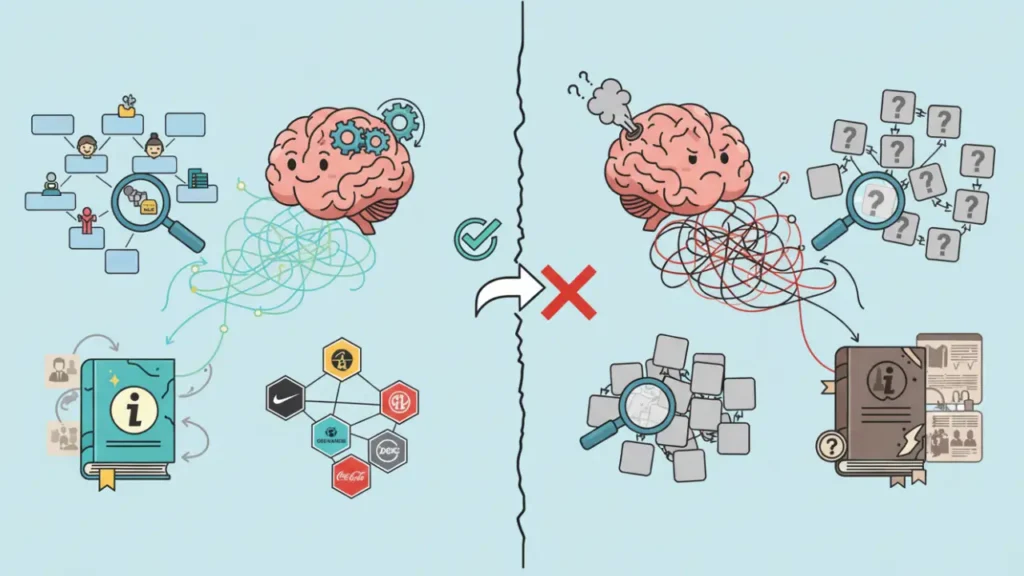
6.1 Good Example: Category-Focused Entity Structure
Imagine an online store selling outdoor gear. A strong entity-based approach focuses on categories and products that logically belong together.
For example:
- Categories: Tents, Backpacks, Hiking Shoes, Sleeping Bags
- Products in each category align with the theme:
- Tents: lightweight tents, family tents, waterproof tents
- Backpacks: daypacks, hiking backpacks, hydration packs
- Hiking Shoes: trail running shoes, waterproof hiking boots
- Sleeping Bags: compact sleeping bags, winter sleeping bags
- Tents: lightweight tents, family tents, waterproof tents
Each category clearly represents a coherent entity. All products within a category relate to the main theme, so Google understands that your store is an authority on outdoor gear. Users also find the store logical and easy to navigate, which improves engagement.
6.2 Bad Example: Subtly Mismatched Products
Imagine an online store that sells outdoor gear, including tents, backpacks, hiking shoes, and sleeping bags. To expand, the store decides to add a category for fitness supplements, thinking that hikers and outdoor enthusiasts might be interested.
At first glance, it seems logical—people who hike or camp may care about protein powders or energy gels. However, Google treats fitness supplements as a separate entity, connected to health, nutrition, and sports rather than outdoor gear.
Even though these products may generate some sales, adding them to the outdoor gear categories can confuse Google about the store’s main topic. Users searching for tents or hiking shoes may not associate the store with supplements, and the addition may dilute the authority the store has built around hiking and camping gear.
6.3 Breakdown of Why the Good Example Works and the Bad Example Fails
The good example, where all products align with the outdoor gear entity, succeeds because:
- Logical category structure: Every category is clearly related to hiking, camping, and outdoor activities.
- Consistent product grouping: Products like tents, backpacks, and sleeping bags reinforce the main entity.
- Clear signals to Google: The store is recognized as an authority in outdoor gear.
- Better user experience: Customers can easily find all relevant products in one cohesive store.
The bad example fails because:
- Subtle entity mismatch: Fitness supplements may seem related to outdoor activities but are part of a different entity network in Google’s understanding.
- Diluted topical authority: Google cannot clearly identify the store as an authority on outdoor gear when unrelated entities are included.
- Reduced relevance for users: People searching for hiking gear are unlikely to look for protein powders, making the store feel inconsistent and less trustworthy.
In ecommerce, even products that seem tangentially related to your audience can harm your SEO if they belong to a separate entity. Expanding your catalog only makes sense when the new products reinforce your main topic and strengthen your authority.
7. Measuring Entity SEO Success
7.1 How to Track Entity Visibility
Tracking entity visibility means checking how well Google recognizes your store, categories, and products as part of the main topic.
For an ecommerce store selling outdoor gear, you can track:
- Rankings for category-level searches like hiking backpacks, trail running shoes, or lightweight tents
- Visibility for brand-specific searches such as Osprey backpacks or MSR tents
- Mentions of your store in Google’s Knowledge Graph or brand-related search results
Tools like Google Search Console, Ahrefs, or SEMrush can show which queries lead users to your website. Instead of just focusing on individual keywords, look for clusters of queries related to your core entity to see if Google recognizes the full scope of your store.
7.2 Monitoring Knowledge Graph Appearances
A Knowledge Graph appearance signals that Google recognizes your brand as an entity.
For a store selling outdoor gear, this could include:
- Brand panels for your store name
- Product listings with rich results showing pricing, reviews, and availability
- Connections between your brand and related entities like hiking gear or camping equipment
Check regularly if your store is appearing in these panels and if the information is accurate. Consistent brand information across your website, social media, and directories is key to maintaining these entity signals.
7.3 Tracking Topic Authority for Ecommerce Stores
For ecommerce stores, topic authority is about showing Google that your website is a trusted source for your main entity, such as a product category or niche.
You can track this by:
- Internal linking: Check that related products and categories link to each other naturally. For example, hiking backpacks should link to hydration packs, trekking poles, or outdoor apparel.
- Category depth: Ensure each category has enough products to clearly represent the entity. A category with only one or two items may appear weak to Google.
- External mentions: Look for backlinks or references from other websites in the same niche. For example, a blog linking to your store for best tents for beginners strengthens your authority.
- Content breadth: Your product descriptions, guides, and category pages should cover all relevant entities related to the main topic. This doesn’t need to be article-heavy, but each category should naturally include related concepts or complementary products.
By focusing on these signals, you help Google see your store as an authority in your niche without relying on article-level keyword analysis tools.
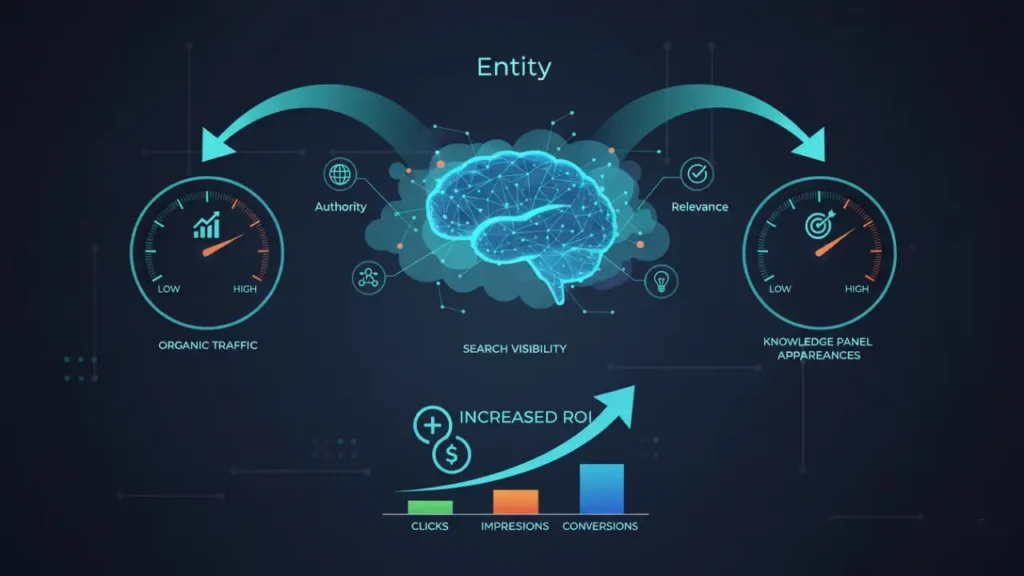
7.4 Measuring Improvements in Semantic Relevance and Traffic Quality
Instead of only tracking raw traffic, measure success by how well users find what they want and how well Google recognizes your entity network:
- Relevant search queries: Are users finding your site through category-level searches like hiking gear for beginners or lightweight tents for 2-person camping?
- Engagement metrics: Are visitors exploring multiple related products, viewing categories, and spending time on product pages?
- Conversions: Are users purchasing the intended products after navigating through logically connected categories?
- Entity consistency: Are your categories and products clearly aligned around a single entity, and are external references recognizing your store in the same way?
These metrics show that your entity-focused structure is working. Google understands your store as a trusted entity in your niche, and users find exactly what they need, which improves both SEO and business performance.
8. Conclusion
Entity-based SEO is not just another trend in search optimization. It is a way of thinking about your website and your products as part of a bigger network of topics and entities. Instead of focusing solely on keywords, you are building a store that Google can understand as a complete, authoritative resource for your niche.
A common mistake ecommerce stores make is adding products or categories that seem related to their audience but actually belong to a different entity. For example, an outdoor gear store adding fitness supplements may seem logical at first glance, but it confuses Google about what the store is really about. Similarly, poorly organized categories or random internal linking can dilute your topical authority.
Another frequent error is relying too much on keywords without considering context. Writing pages stuffed with phrases or creating isolated product descriptions will not build authority. Google wants to see connections between your categories, products, and related topics.
When approaching entity-based SEO, think in terms of relationships. Every category, product, and page should reinforce your main entity. Make sure your content, internal links, and structured data all signal the same focus. Look at your competitors who rank higher and see how they organize categories, connect products, and present their entity networks. Analyze their approach, identify gaps, and find opportunities to improve your own structure.
The goal is to create a store that is easy for both users and search engines to understand. When done right, entity-based SEO not only improves your rankings but also enhances the user experience, increases engagement, and drives more conversions. Instead of chasing individual keywords, you are building authority, relevance, and trust, one connected entity at a time.