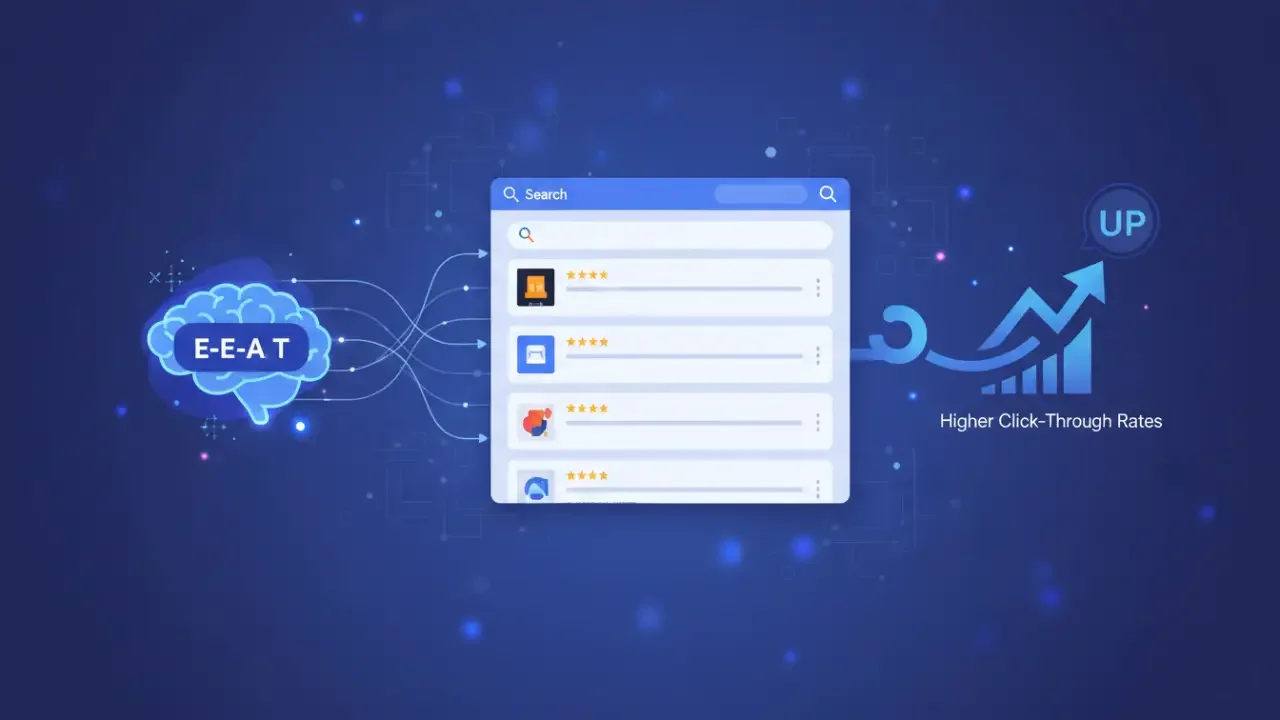
By implementing rich snippets and strengthening E-E-A-T signals, ecommerce stores can increase visibility, build trust, and boost click-through rates. Proper structured data, authentic reviews, and clear product categories make your search results more attractive and credible.
Table of Contents
1. Introduction
When people talk about improving SEO, they usually focus on rankings and how to reach the top of Google search results. But ranking high is only half the story. The real question is simple: when users see your result, do they actually click it?
That is where rich snippets and E-E-A-T come in.
Rich snippets are those upgraded search results that include extra details like star ratings, prices, reviews, or availability. They make your result look more helpful and reliable, which instantly grabs attention and increases clicks.
E-E-A-T stands for Experience, Expertise, Authority, and Trust. These are signals Google uses to decide if your content is credible and deserves visibility. A page that shows strong E-E-A-T is more likely to appear with rich snippets because Google understands it as a trustworthy source.
Together, rich snippets and E-E-A-T can make a huge difference in your click-through rate (CTR). You might rank well, but if your result looks plain or untrustworthy compared to others, people will scroll right past it.
In this article, we will explore how these three elements connect and what you can do to make your search results stand out.
1.1 Why rich snippets matter more than ever
Search results are not what they used to be. A few years ago, every result looked almost identical with a blue title, a green URL, and a short description. Now, you often see search results that include reviews, prices, images, or FAQs.
These improved listings are called rich snippets, and they can significantly increase both visibility and clicks.
For example, imagine two online stores selling the same pair of running shoes:
- Store A has a plain title and a short description.
- Store B shows star ratings, price, and “in stock” information right under the title.
Most users will click on Store B. It looks more helpful and trustworthy right away.
That is the real value of rich snippets. They give people useful information before they even visit your website and help you stand out even if you are not ranked first.

1.2 The link between E-E-A-T, visibility, and click-through rates
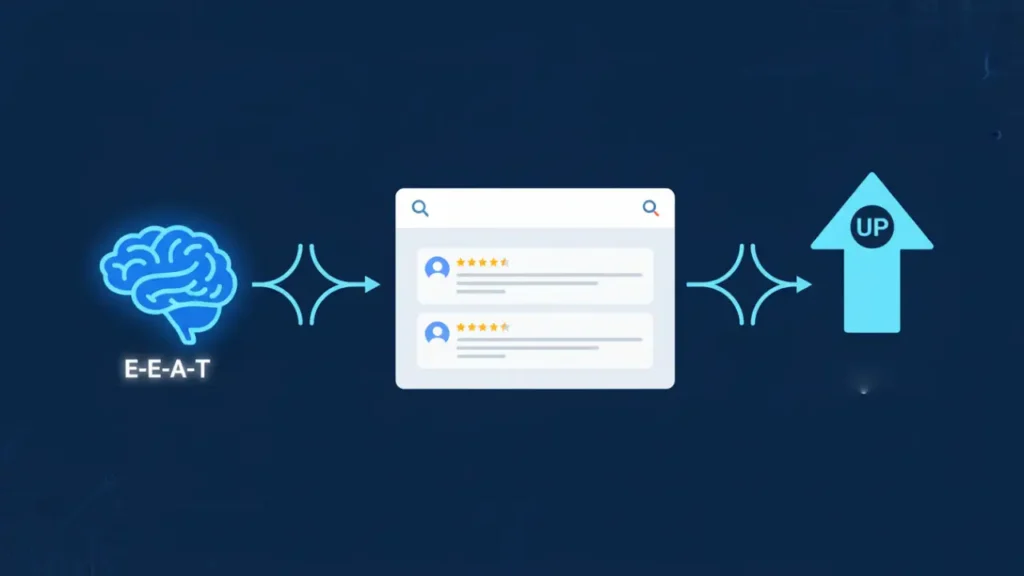
Rich snippets do not appear by accident. Google decides which websites deserve them based on credibility and trust signals, which come from E-E-A-T.
If your website shows expertise through accurate content, experience through real insights or data, authority through a strong brand or author, and trust through good reviews and transparency, Google is far more likely to reward your pages with rich snippets.
This does more than just change how your result looks. It also builds trust with users. People naturally click on results that appear established and reliable.
For ecommerce stores, this can be a game changer. A store that displays clear product data, visible ratings, and authentic reviews sends strong trust signals. Another store with the same products but without those signals may get far fewer clicks even if it ranks just as high.
Rich snippets are the visible proof of E-E-A-T. They show users and Google that your website deserves attention and trust.
2. Understanding rich snippets
To understand how rich snippets help with SEO and click-through rates, it is important to first know what they are, how they appear, and why Google shows them.
Rich snippets are special search results that include extra information beyond the usual title, URL, and description. They often show things like product ratings, prices, stock availability, recipe details, event dates, or author information.
They exist to make search results more useful and engaging. When users can see key details right on the results page, they can make faster decisions about which link to click.
For ecommerce, rich snippets are especially valuable because they let you display real product data directly in search results.
2.1 What rich snippets are and how they appear in Google
Rich snippets appear when Google can clearly understand what your page is about through structured data. Structured data is a special type of code (often JSON-LD format) added to your website that helps search engines identify specific elements such as prices, reviews, or product types.
For example, if you sell coffee machines and add structured data to your product pages, Google can show your search result with:
- Average star rating
- Price range
- “In stock” status
- Number of reviews
This immediately makes your listing more attractive. Users can compare your product with others right from the search page.
The goal is to give Google clear, organized data so it can represent your products accurately and increase your visibility.

2.2 The difference between regular snippets and rich snippets
A regular snippet is what you see for most search results: a title, URL, and short description pulled from your meta tags or page text.
A rich snippet includes additional data that gives more context about your content.
Let’s look at a quick example:
Regular snippet:
CoffeeMaster | Buy Espresso Machine Online
Find high-quality espresso machines at CoffeeMaster. Free shipping on orders over 100€.
Rich snippet:
⭐ 4.8 (236 reviews) | Price: 299€ | In stock
CoffeeMaster | Buy Espresso Machine Online
Free shipping on orders over 100€. Trusted by thousands of coffee lovers.
Even though both results lead to the same product, the second one feels more complete, reliable, and clickable.
That is the power of rich snippets. They do not just make your result look nicer, they also improve user trust and decision-making before the click even happens.

2.3 Common types of rich snippets
Google supports many types of rich snippets, and e-commerce sites can benefit from several of them. The most common include:
- Product snippets: show product names, prices, ratings, and stock status.
- Review snippets: display average ratings or snippets of user reviews.
- FAQ snippets: highlight key answers directly under your listing.
- Breadcrumb snippets: show category paths, which improve navigation and trust.
- Video snippets: appear when you include structured data for tutorials or product demos.
Each type helps Google understand your content better and gives users an instant idea of what they can expect.

2.4 Why rich snippets are essential for ecommerce
For ecommerce, rich snippets can mean the difference between getting noticed and being ignored.
When a user searches for “wireless headphones,” they might see ten similar results. The ones with prices, reviews, and clear product info naturally attract the most clicks.
Rich snippets also improve brand perception. Seeing consistent, well-formatted data builds confidence that your store is professional and trustworthy.
In short, rich snippets make your products stand out, increase click-through rates, and help Google see your site as an authoritative source of information.
3. The role of E-E-A-T in snippet performance
Adding structured data to your website is an important first step, but it does not automatically guarantee rich snippets. Google also needs to trust that your website is reliable, accurate, and helpful. That is where E-E-A-T comes in, which stands for Experience, Expertise, Authority, and Trust.
These four factors help Google understand if your content deserves to be highlighted in search results. Structured data tells Google what your content is about, but E-E-A-T tells it how much to trust you. When both work together, your chances of getting rich snippets increase significantly.
3.1 What E-E-A-T really means for websites
Here is what each part of E-E-A-T means and how it applies to ecommerce websites:
- Experience: Show that you have real knowledge of your products. If you sell camping gear, include product descriptions or videos made by people who have actually used the tents or backpacks in real conditions. Honest insights matter more than copied product specs.
- Expertise: Demonstrate that your store knows its niche. A pet supply store that publishes detailed guides on dog nutrition or care shows expertise beyond just listing products.
- Authority: Build recognition and credibility. When other trusted websites mention you, or when customers leave verified reviews, it strengthens your authority.
- Trust: This is the most important part. Use secure payment systems (HTTPS), list clear contact information, and keep product details accurate. Reviews and transparent return policies also help users feel safe.
When your website follows these principles, Google is more confident that it can recommend your content through rich snippets.
3.2 How E-E-A-T affects rich snippets
Google uses E-E-A-T signals to decide which websites deserve enhanced search features. For example, two stores might both have structured data for their products, but only one gets review stars or product availability displayed. The reason often comes down to trust.
A store with genuine customer reviews, expert-written guides, and strong brand credibility will likely earn those enhanced snippets. A site with poor content quality, fake reviews, or copied descriptions will not.
You can think of E-E-A-T as Google’s way of verifying quality before giving you the spotlight.
3.3 How to strengthen E-E-A-T and earn better snippets
If you want your site to qualify for rich snippets more often, here are a few ways to build stronger E-E-A-T signals:
- Use structured data correctly. Make sure your code follows Schema.org guidelines. Test it regularly using Google’s Rich Results Test to confirm that it works.
- Show real expertise. Add author names and bios on blog posts, and let experts write or review your guides.
- Collect and display authentic reviews. Verified product reviews help both users and search engines trust your content.
- Keep your content updated. Outdated prices, availability info, or product details can harm both trust and snippet accuracy.
- Get mentioned by reputable sources. Backlinks from relevant blogs, magazines, or industry pages send a strong authority signal.
When Google sees that your store consistently provides accurate information, expert advice, and positive user experiences, it becomes much easier for your products to appear with rich snippets.

4. How rich snippets impact click-through rates
Rich snippets are not just about looking better in search results. They directly affect how often people click on your website. In SEO terms, this is your click-through rate (CTR), and it shows how many users choose your result compared to others that appear for the same search.
When users see more information at a glance, such as ratings, prices, or reviews, they can make faster and more confident decisions. This is why rich snippets often lead to higher CTRs and better engagement.
4.1 Why users click on enhanced results
People are naturally drawn to results that look informative and trustworthy. A regular result shows only a title and short description. A rich snippet gives much more context before the click.
For example:
- Plain result: “Buy men’s running shoes online – free delivery.”
- Rich snippet: ⭐ 4.7 (542 reviews) | Price: from 89€ | In stock | Free delivery
The second option immediately builds confidence. It shows popularity, transparency, and value before the user even visits the page.
Rich snippets help users filter options more efficiently. They can quickly see which products or brands meet their expectations, which increases the chances of clicking your link.

4.2 The psychology behind click-through rates
CTR is often influenced by trust and perceived value. When a search result looks more detailed or verified, people assume it must come from a reliable source.
In psychology, this is called social proof — people are more likely to trust and follow what others have already approved. Seeing hundreds of reviews or a high average rating next to your product listing is a powerful trust signal.
Rich snippets also create a sense of authority. When your result displays structured, verified information, users perceive it as more professional. Over time, this consistent credibility improves not only CTR but also brand reputation.
4.3 How rich snippets influence e-commerce performance
For e-commerce, CTR directly affects sales and brand exposure. You can have great products and even rank well, but if your result does not catch attention, you lose potential customers to competitors.
Rich snippets make your results more interactive and useful. They highlight details that people care about most, such as:
- Price and discounts
- Stock availability
- Average star rating
- Review count
- Delivery or return details
- FAQ (frequently asked questions)
For example, a store selling espresso machines that adds structured data for product ratings and availability can easily outperform another store with a plain listing. Even if both rank on the same page, the one with rich snippets will attract more clicks and, as a result, more sales.

4.4 Real-world data on CTR improvements
Rich snippets do more than make your pages stand out. Several case studies show they can significantly increase clicks and engagement. Here are some examples:
- A FAQ schema case study tested over a thousand pages and saw daily organic clicks rise by over 200, with average CTR increasing from 0.1% to 1.3%.
- Google’s research showed that adding structured data to video pages nearly doubled click-through rates in search results.
- An experiment by SearchPilot found that pages with properly implemented schema consistently gained more visibility compared to control pages.
- E-commerce brands that used product schema markup reported higher CTR, better engagement, and increased conversions on category and product pages.
These examples highlight some key takeaways:
- Structured data improves visibility by helping Google understand your pages better.
- Rich snippets give users more information upfront, making them more likely to click.
- Consistently applying schema and maintaining strong E-E-A-T signals can have measurable results in traffic and conversions.
Implementing rich snippets is not a one-time task. Regular monitoring and updates ensure that your structured data remains valid and your pages continue to perform at their best.

5. How to optimize for rich snippets and E-E-A-T
Optimizing for rich snippets is not just about adding code to your website. You also need to focus on trust, credibility, and user experience, which are the core of E-E-A-T. The combination of structured data and strong trust signals increases your chances of earning enhanced search results.
5.1 Implement structured data correctly
Structured data tells Google exactly what your pages are about. For e-commerce stores, the most relevant types include:
- Product schema: Name, price, availability, SKU, brand, and ratings
- Review schema: User or expert reviews with rating value and count
- FAQ schema: Frequently asked questions about products or services
- Breadcrumb schema: Category paths that clarify site hierarchy
- Video schema: Product demos, tutorials, or unboxing videos
Use Schema.org for reference and make sure your markup is valid. Test it using Google’s Rich Results Test to ensure it is recognized correctly.

5.2 Write content that demonstrates E-E-A-T
Your content should make it clear that your store is credible and knowledgeable. For e-commerce, this means:
- Detailed product descriptions that show real experience or testing insights
- Expert buying guides or comparison charts
- Transparent brand and product information
- Author names and credentials on articles or guides
This approach signals to Google that your site is reliable, which increases the likelihood of rich snippets being displayed.
5.3 Encourage authentic reviews and ratings
Reviews and ratings are one of the strongest trust signals for both users and search engines.
- Collect reviews from real customers and display them prominently
- Make sure review dates are current
- Use structured data to mark up reviews so Google can include them in search results
For example, a hiking store that shows ratings and reviews for tents, backpacks, and shoes can see higher CTR compared to stores without review markup.
5.4 Optimize visuals and formatting for snippets
Rich snippets often include images or visual elements, which can make your listing more attractive in search results.
- Include high-quality product images
- Use consistent formatting for titles, pricing, and descriptions
- Make sure your categories are clear and logically structured
For e-commerce, clear visual cues and consistent formatting make your pages more clickable and trustworthy.
5.5 Monitor and update regularly
SEO is not a one-time task. Rich snippets and E-E-A-T signals require ongoing attention:
- Regularly check structured data in Google Search Console for errors
- Update product availability, pricing, and reviews frequently
- Audit your categories and product descriptions to make sure they are complete, accurate, and relevant
By combining technical optimization with strong trust signals, you increase both visibility in search results and the likelihood that users will click your listings.

6. Measuring success
After implementing structured data and improving your E-E-A-T signals, it is important to measure whether your efforts are effective. For e-commerce stores, success is not just about rankings, but also about visibility, clicks, and conversions.
6.1 Track rich snippet performance in Google Search Console
Google Search Console (GSC) provides a detailed view of how your rich snippets perform under the Enhancements section. Here you can:
- See what types of rich snippets Google detects on your site, such as product, review, or FAQ snippets
- Identify errors or critical issues that may prevent your snippets from showing
- Check which snippets are valid, valid with warnings, or invalid, and understand why they may be failing
Monitoring this report allows you to spot technical issues quickly and ensure that structured data is correctly implemented. Fixing errors increases the chances that your rich snippets appear in search results.
6.2 Monitor knowledge panel appearances
For e-commerce brands, Google may show knowledge panels or branded search results highlighting your store, products, or key information:
- Verify your business through Google Business Profile to improve authority
- Check how your brand and categories are represented in search
- Track mentions of your brand in articles, reviews, and external sites to ensure consistency
Knowledge panels strengthen your E-E-A-T signals and encourage more clicks by signaling credibility and trust to users.
6.3 Track relevant traffic and engagement
CTR is only part of the picture. It is important to see how users interact with your pages after clicking on your snippets:
- Pageviews per session: Are visitors exploring multiple related products or categories?
- Bounce rate and session duration: Are users finding the information they need?
- Conversions: Are clicks translating into purchases or other desired actions?
By tracking these metrics, you ensure that rich snippets attract not just traffic, but the right kind of visitors who are likely to convert.
6.4 Evaluate semantic relevance and product alignment
Google rewards e-commerce sites that clearly show relationships between products, categories, and topics. Check for:
- Category consistency: Are products grouped correctly under the right entity?
- Internal linking: Are related products and categories linked naturally?
- Content gaps: Are there product details or features missing compared to competitors?
Ensuring your structured data, content, and product organization all support the same entities improves snippet eligibility, relevance, and search performance.
7. Common mistakes and conclusion
Optimizing for rich snippets and E-E-A-T can dramatically improve your visibility and click-through rates, but many e-commerce stores make avoidable mistakes. Recognizing these pitfalls helps you focus your efforts and achieve real results.
7.1 Common mistakes
Some of the most frequent errors include:
- Incorrect or incomplete structured data: Using markup incorrectly or leaving out required fields can prevent rich snippets from appearing. Always test with Google’s Rich Results Test.
- Ignoring category alignment: Products must match their logical entity. Mixing unrelated items, like fitness supplements with outdoor gear, can confuse Google and weaken your authority.
- Overlooking reviews and ratings: Reviews are a major trust signal. Missing, outdated, or fake reviews reduce both CTR and perceived reliability.
- Focusing only on rankings: High placement in search results is not enough. Without rich snippets and strong E-E-A-T signals, users may skip your result.
- Neglecting knowledge panel and brand signals: Google rewards consistent and authoritative brand information. Ignoring this can limit snippet eligibility.
7.2 The right mindset for snippet and E-E-A-T optimization
Approach rich snippets and E-E-A-T as a holistic strategy, not a one-time technical fix. This means:
- Think in terms of trust and credibility, not just keywords or rankings
- Keep your structured data accurate and up to date
- Align all product categories, content, and links around clear entities
- Continuously monitor your results in Google Search Console, check for errors, and see which snippets perform best
- Study competitors that rank higher and examine how their structured data, product alignment, and trust signals differ from yours

7.3 Final takeaway
Rich snippets and E-E-A-T are essential for modern ecommerce SEO. They help Google understand your site, build user trust, and increase click-through rates. By avoiding common mistakes, maintaining consistent entity alignment, and continuously refining both structured data and content credibility, you can maximize the visibility and performance of your products in search results.
In the end, the goal is simple: make your results informative, trustworthy, and attractive so that users choose your store over competitors every time.